

Healing Quest Expands Mental Health Support for Black Men & Women in NJ
News originally published by
EIN Presswire
Trauma Therapy;

Therapy for African American Men & Women

Family Therapy
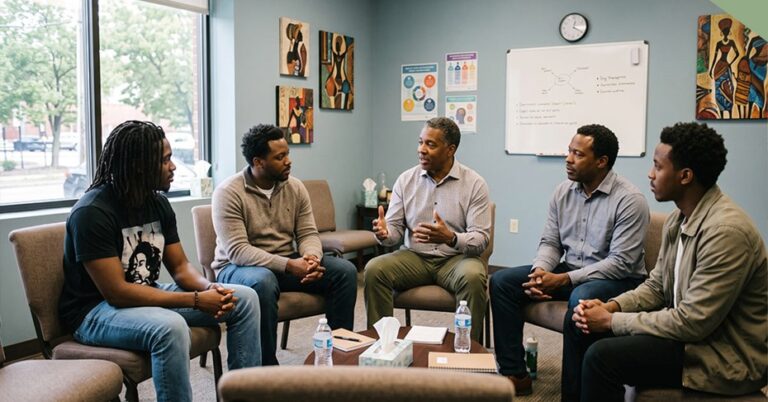
Black Men’s Therapy;
Healing Quest expands mental health support for Black women in NJ, providing compassionate, culturally responsive counseling and wellness services.
COLLINGSWOOD, NJ, UNITED STATES, November 17, 2026 /EINPresswire.com/ -- Healing Quest Counseling Services is sharing an analysis of mental health care access for Black men and women in New Jersey. The review looks at reported treatment gaps, stigma, cultural factors, and community settings. It draws on information from the National Alliance on Mental Illness (NAMI) and U.S. government health data. The practice is also announcing an expansion of its mental health support for Black adults in the state. This release outlines the context behind the expansion and what the available information suggests.Overview of Mental Health Care Access
Mental health conditions affect people in every community. They include anxiety, depression, trauma-related conditions, and many others. Access to care, however, does not look the same for every group. According to NAMI, the African American community experiences mental health conditions at rates comparable to the general population. NAMI also states that the community receives significantly less treatment. This gap is the main subject of the analysis.
NAMI notes that culture, beliefs, values, race, and language all shape how people perceive and experience mental health conditions. This suggests that a person’s background may influence when and how they look for care. It may also influence what kind of care feels appropriate.
The overview points to a simple observation. Need and access are two separate questions. A community can have a level of need similar to others and still face barriers to care. Understanding those barriers is the first step toward addressing them.
Key Trends in Reported Need and Treatment
Government data offers one view of these trends. The Office of Minority Health, part of the U.S. Department of Health and Human Services, reports that Black adults in the United States are more likely than white adults to report persistent sadness, hopelessness, and feeling that everything is an effort. The same office reports that Black adults are less likely than white adults to receive proper care.
NAMI materials add to this picture. They indicate that one in three Black adults with mental illness receives treatment. This figure appears in NAMI’s discussion of mental health equity for Black and African ancestry adults. These findings point in the same direction. Reported symptoms and received treatment do not line up evenly. The gap appears in national data, and it appears across different sources.
NAMI also describes work to improve care for Black and African ancestry adults living with serious mental illness. Its Community Health Equity Alliance brings together community-based organizations and thought leaders. The stated aim is to improve access to timely and effective care. The existence of this work indicates that the gap is recognized at a national level. None of these figures describes any single person’s experience. They describe broad patterns. Local conditions may differ.
Stigma and Community Perspectives
NAMI identifies stigma as one reason for lower treatment rates. It describes stigma and a lack of acceptance within some communities as a barrier to seeking help. Embarrassment about mental health concerns can make a first conversation harder.
NAMI has also reported that Black and brown men may be less likely to reach out for help with their mental health. In one example, a NAMI affiliate in Ohio hosted a forum titled Our African American Men: A Journey to Mental Wellness and Well-Being. A community outreach coordinator for that affiliate said the goal was to educate men, as well as parents and caregivers who support them.
NAMI’s Sharing Hope program takes a similar approach. It reaches out to African American communities to encourage mental health education and reduce stigma. The program works through conversation and shared stories. These examples suggest that education plays a role. When people understand mental health conditions, they may feel more comfortable discussing them. When families and caregivers understand them, they may be better able to offer support.
Stigma does not affect everyone in the same way. Age, gender, family history, and community setting can all play a part. The available information suggests only that stigma is one of several factors worth considering.
Culture, Identity, and Care
NAMI states that culture and identity should be part of the mental health care conversation. This idea appears in its materials on equitable access in underrepresented communities. NAMI also points to persisting disparities in health outcomes and access to mental health care in underserved communities. In practice, this idea can take several forms. A clinician may ask about a client’s background and values. A clinician may also ask how family, work, and community shape the client’s view of therapy. These questions allow care to reflect the person receiving it.
Representation may also matter. NAMI’s materials note that few faces of color are visible among people who share stories of living with mental illness. Seeing others with similar backgrounds discuss mental health may make the topic feel more approachable. This is an observation, and individual responses vary.
In 2008, July was designated as Bebe Moore Campbell National Minority Mental Health Awareness Month. NAMI marks the month each year to raise awareness about equitable access to care. The designation reflects ongoing attention to the topic at the national level. Taken together, these points suggest that culturally aware care is a recognized topic in mental health discussions. They do not suggest a single method that fits every person.
Faith and Community Settings
Faith communities appear often in NAMI’s work. Its FaithNet initiative supports faith leaders and congregations. Its Bridges of Hope program is designed for reaching faith communities. One speaker in a NAMI story describes beginning with faith and then moving toward medical care.
NAMI has also formed partnerships with Black sororities. Alpha Kappa Alpha and Delta Sigma Theta Sorority, Incorporated, have worked with NAMI to promote mental health awareness. Under the Delta Sigma Theta partnership, chapters host community conversations, promote support groups, and encourage chaplains to attend mental health and suicide prevention trainings.
These examples indicate that churches and community organizations can serve as entry points for mental health conversations. People may feel more at ease discussing a topic in a familiar setting.
Faith is a personal choice in counseling. Some people ask to include it. Others prefer a secular approach. Healing Quest Counseling Services offers faith-integrated therapy only when a client requests it. All other counseling is provided without a faith component unless the client asks for one. This approach reflects the observation that preferences differ. Care that respects those preferences may be easier to accept.
Role of Healing Quest Counseling Services
Healing Quest Counseling Services operates within this segment of the mental health care field and observes trends related to access to care for Black men and women in New Jersey. Its activity reflects a portion of the broader mental health landscape, particularly in counseling services involving trauma and related concerns.
Details of the Expansion
The expansion described in this release applies to counseling support for Black men and women in New Jersey. The practice states that the expansion follows its review of the reported gaps described above. The review is informational. It does not replace medical advice, and it does not describe the outcome of any individual’s care.
Counseling is one part of a larger system. Primary care providers, schools, faith communities, and families all play roles. Counseling support is one option among several that people may consider. People who want to learn more about the expansion can contact the practice using the details at the end of this release. The practice can explain what is available and how scheduling works.
Regional Analysis: New Jersey
The references reviewed for this release do not provide New Jersey–specific treatment figures. For that reason, this section offers general observations only. New Jersey includes urban, suburban, and rural communities. Access to care may differ across these settings. A person in a dense urban area may have more providers nearby. A person in a rural area may travel farther to reach one.
NAMI operates through state organizations and local affiliates. These groups connect families to mental health resources locally and nationally. Support groups, education programs, and community events are among the activities NAMI describes. People in New Jersey can look for a local NAMI affiliate to learn about nearby options.
Healing Quest Counseling Services is based in Newfield, in southern New Jersey. The practice provides community-based mental health services. Community-based care takes place where clients live, which may reduce some travel barriers. Whether this applies depends on the individual and the service.
Regional differences are worth tracking. Local data would give a clearer picture of where gaps are widest. Until then, national information offers a general guide. It may not match conditions in every New Jersey county.
External Factors
Several outside factors may influence access to mental health care. These include the number of available providers, insurance coverage, location, and comfort with the care setting. The references do not rank these factors, so no ranking is offered here.
NAMI publishes guidance on topics such as understanding health insurance and finding a mental health professional. Its materials also cover what to do in a crisis. These resources suggest that practical questions often come before the first appointment.
Cost and coverage can shape decisions. A person may ask whether a provider accepts a given plan. A person may also ask about scheduling, since work and family duties can limit available hours. These are common practical concerns. They are not specific to any one community.
Trust is another factor. NAMI’s materials indicate that cultural understanding matters in care. A person who feels understood may be more likely to return for a second visit. This is a general observation and not a measured result. Anyone in crisis can call or text 988, the Suicide & Crisis Lifeline operated in the United States. Emergency services are available at 911.
Outlook
The available information suggests that mental health access for Black adults will remain a topic of attention. NAMI’s ongoing initiatives, its partnerships with community groups, and its annual awareness month indicate continued interest. Federal data on reported symptoms and treatment gaps point the same way. Several questions remain open. Local data in New Jersey may help show where needs are greatest. Feedback from community members may help shape services. Research on which approaches work best may guide future decisions.
Any outlook involves uncertainty. Changes in funding, provider supply, and public attitudes could affect access over time. The references do not predict specific outcomes, and this release does not either.
Healing Quest Counseling Services states that it will continue to monitor these developments. It plans to review its services as new information becomes available. The practice notes that individual needs differ and that counseling is not a substitute for emergency care.
For readers, the main takeaway is informational. Reported need and received treatment do not always match. Stigma, culture, cost, and access all appear to play roles. Open conversations in homes, faith settings, and clinics may help.
About Healing Quest Counseling Services
Healing Quest Counseling Services provides community-based mental health counseling in New Jersey. The practice is based in Newfield. Its services include counseling for trauma-related concerns, with a focus on complex trauma recovery. Approaches used by its clinicians include cognitive behavioral therapy and EMDR. Faith-integrated counseling is offered when a client requests it. Its general activity includes individual, family, and group sessions delivered in office and community settings.
Contact Information
For more information:
Email: Referral@healingquestcv.com
Phone: (856)-605-7332
Website: https://healingquestcv.com/
Desiree Guyton
Healing Quest Counseling Villages
+1 (856)-605-7332
careteam@healingquestcv.com
Visit us on social media:
Facebook
Legal Disclaimer:
EIN Presswire provides this news content "as is" without warranty of any kind. We do not accept any responsibility or liability for the accuracy, content, images, videos, licenses, completeness, legality, or reliability of the information contained in this article. If you have any complaints or copyright issues related to this article, kindly contact the author above.
