

China Custom Sheet Metal Bending Fabrication: MOQ, Free Sample, and Supplier Selection Guide
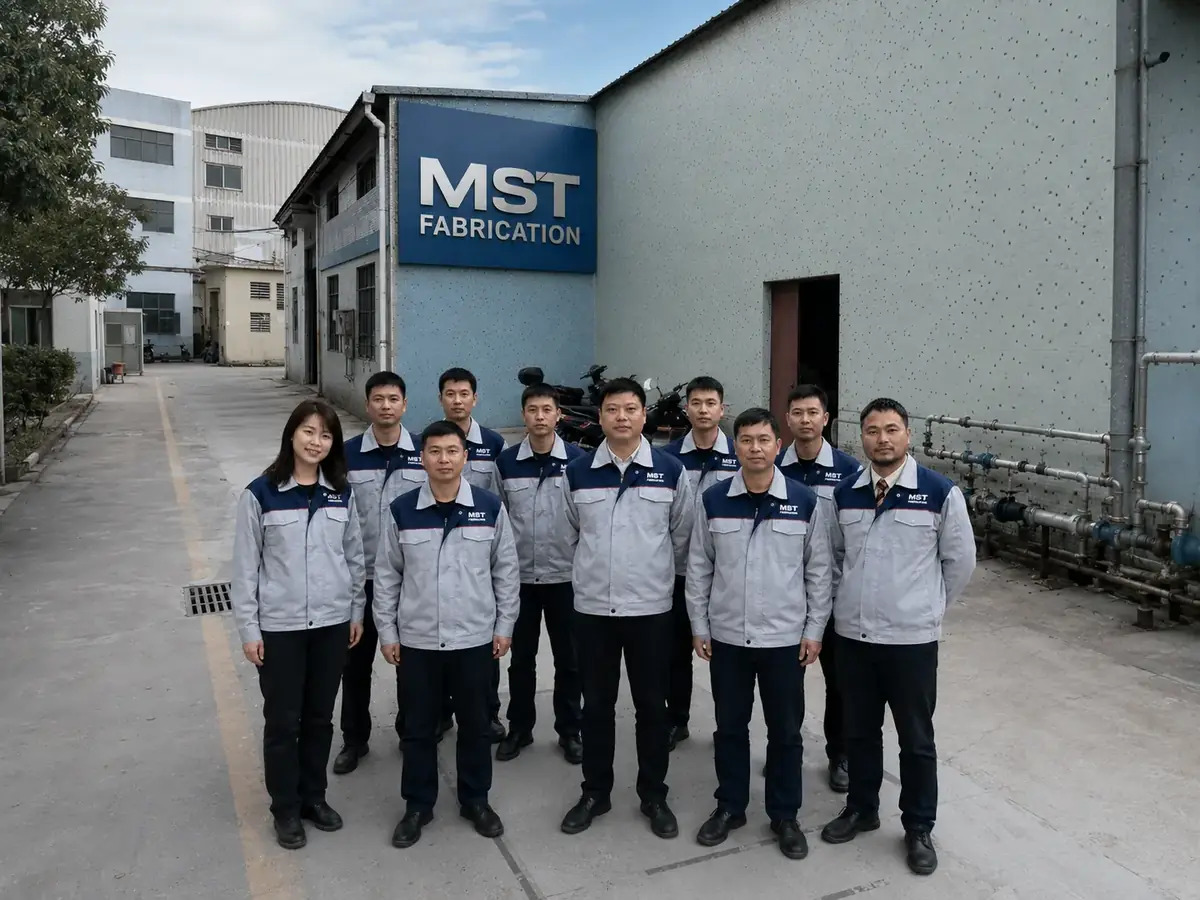
China Custom Sheet Metal Bending Fabrication
If you are sourcing custom sheet metal bending fabrication from China, the short answer is this: MOQ is often flexible for prototype and low-volume work, free samples are usually limited to drawings review or sample-cost credit rather than fully free physical parts, and the best supplier is one that controls cutting, bending, welding, finishing, and inspection in-house. For industrial buyers, the lowest-risk path is to send complete drawings, define tolerances and surface requirements clearly, and choose an OEM/ODM factory that can support both sample development and repeat production.
In practical sourcing terms, sheet metal bending is not just a single process. It is the joining point between design intent and manufacturable hardware. When a supplier can combine laser cutting, CNC bending, welding, grinding, powder coating, and assembly, the buyer gains better dimensional control, shorter communication loops, and fewer handoffs. That is why custom sheet metal bending fabrication is widely used for enclosures, electrical cabinets, control panels, chassis, frames, brackets, and precision assemblies across telecom, energy storage, automation, and data-center infrastructure.
What Custom Sheet Metal Bending Fabrication Means
Custom sheet metal bending fabrication is the process of transforming flat metal sheet into a three-dimensional part according to customer drawings and technical specifications. Typical steps include:
Material selection: stainless steel, aluminum, carbon steel, galvanized steel, and other specified sheet materials.
Laser cutting or punching: flat patterns are cut to geometry before forming.
CNC bending: press brakes and tooling create precise angles and bend radii.
Welding and fastening: parts are joined into frames, cabinets, or assemblies.
Surface finishing: grinding, polishing, powder coating, paint, or plating, depending on environment and appearance requirements.
Final assembly and inspection: hardware, hinges, locks, gaskets, labels, and packaging are completed before shipping.
For industrial buyers, the term usually refers to drawing-based OEM manufacturing rather than catalog items. The product is designed around a specific application, whether that means an IP-rated outdoor telecom enclosure, a network rack cabinet, or a battery storage enclosure for energy systems.
Market Context: Why Demand Keeps Growing
The global sheet metal fabrication market continues to expand as manufacturing automation, telecom infrastructure, and electrification projects scale up. According to Grand View Research, the global sheet metal fabrication market was valued at roughly USD 11 billion in 2023 and is expected to grow at a mid-single-digit CAGR through 2030. Third-party market reports from firms such as Fortune Business Insights and MarketsandMarkets also point to steady demand from industrial equipment, electrical enclosures, transportation, and energy systems.
Several trends support that outlook:
5G and telecom deployment are increasing the need for weather-resistant cabinets, base-station enclosures, and outdoor equipment housings.
Data centers require server rack cabinets, network enclosures, and control housings with strong thermal and cable-management design.
Energy storage and solar infrastructure are driving demand for battery enclosures, distribution boards, and protective cabinets.
Industrial automation continues to increase the use of PLC enclosures, HMI panels, control station cabinets, and operator interfaces.
In other words, sheet metal fabrication is no longer limited to simple brackets or chassis. It sits at the intersection of industrial design, electrical protection, thermal management, and mechanical reliability.
MOQ in China: What Buyers Should Expect
MOQ means minimum order quantity, but in custom sheet metal bending fabrication it is not a fixed universal number. MOQ depends on setup time, material type, geometry complexity, finishing, and whether the order is prototype, pilot batch, or repeat production.
For most China-based OEM/ODM suppliers, the practical MOQ pattern looks like this:
Prototype or engineering sample: often 1 piece to a few pieces, especially when the goal is design validation.
Low-volume pilot production: usually around 10 to 50 pieces, depending on complexity and finish.
Stable batch production: 50 pieces and above is common when the part is standardized and the tooling is already confirmed.
However, the MOQ can rise when the part includes many bends, embedded hardware, welding distortion risk, high cosmetic standards, or special coatings. A simple bracket can be economical in very small quantities. A large welded cabinet with precision door alignment, gasket sealing, and powder-coated finish usually requires a higher start quantity to cover setup and inspection costs.
Buyers should also understand the difference between unit price and total landed project cost. A supplier that accepts a low MOQ may still require a higher piece price if the part needs frequent machine changeovers, tooling adjustment, or manual finishing. Conversely, a slightly larger MOQ can reduce per-unit cost significantly when the project moves into repeat production.
Can You Get a Free Sample?
The phrase “free sample” is common in sourcing conversations, but in custom sheet metal fabrication it should be interpreted carefully. A truly free physical sample is less common than a free catalog item, because custom parts require engineering review, CNC programming, material handling, and machine setup.
What buyers can realistically expect from a China supplier is one of the following:
Free DFM review: the factory checks your drawing for manufacturability, bend allowance, hole placement, and tolerance risk.
Free quotation and process advice: the supplier suggests material or design changes to reduce cost or improve yield.
Sample fee credit: the sample cost is later deducted from the bulk order.
Low-cost prototype: the first part is charged at near-cost to support project development.
For a custom enclosure or cabinet, “free sample” may therefore mean free technical support rather than a no-cost physical prototype. This is normal in industrial procurement. The best way to avoid confusion is to ask whether the sample fee includes material, machining, surface finishing, and shipping, and whether it can be offset against a future production order.
How to Select a Reliable Sheet Metal Supplier in China
Choosing the right supplier is more important than negotiating the lowest initial price. In sheet metal bending fabrication, quality problems often appear later: door gaps, inconsistent holes, coating defects, weld distortion, or poor assembly fit. A structured supplier evaluation helps reduce these risks.
Here are the most important selection criteria:
Engineering support: Can the supplier review drawings, suggest DFM improvements, and explain bend radius, relief, and tolerance trade-offs?
Process integration: Does the factory control laser cutting, CNC bending, welding, finishing, and final assembly in-house?
Material capability: Can they work with stainless steel, aluminum, carbon steel, and galvanized steel according to specification?
Surface finishing control: Are powder coating, polishing, grinding, and other finishes handled consistently?
Inspection discipline: Does the supplier measure critical dimensions, verify fit, and check appearance before shipping?
Export packaging: Are parts packed to prevent scratches, corner damage, moisture, and transport deformation?
Communication speed: Do technical questions get answered clearly, with drawings marked and revision history tracked?
When possible, request sample photos, process photos, and inspection checkpoints. For repeat orders, ask whether the supplier maintains version-controlled drawings and inspection records. That matters more than a one-time low quote.
Comparison: Trading Company, Small Workshop, or Integrated OEM Factory
A direct comparison helps clarify sourcing choices without overcomplicating the decision.
Trading company model: often convenient for first-time buyers because it can bundle communication and sourcing. However, process control may be limited, and quality issues can be harder to trace back to a specific machine or operator.
Small workshop model: useful for very simple parts or urgent jobs, but capacity, consistency, and finishing stability can vary. This option may work for basic brackets, but it is less suitable for complex enclosures or projects that require repeated delivery accuracy.
Integrated OEM/ODM factory model: usually the best fit for custom sheet metal bending fabrication when the part requires multiple processes, export packaging, and stable repeat orders. In-house control over cutting, bending, welding, and finishing makes it easier to hold tolerances and manage lead time.
For industrial buyers, the integrated factory model is often the most balanced choice because it reduces handoff risk and improves traceability from drawing to shipment.
Technical Basics Buyers Should Know
Even when you are not a mechanical engineer, a few technical concepts will improve your RFQ quality:
Bend radius: the inside curve created during forming. It affects strength, appearance, and material cracking risk.
Bend allowance and K-factor: used to calculate flat pattern length before bending.
Tolerance: the acceptable dimensional variation. Tight tolerances increase cost and inspection effort.
Hole-to-bend distance: too little distance can cause deformation or collision during forming.
IP and NEMA requirements: important for dust, water, and outdoor protection in electrical enclosures.
Typical CNC bending capability can be very good, but final results depend on material type, thickness, bend length, tooling, and part geometry. For many industrial parts, practical forming tolerances are often in the sub-millimeter range, but critical dimensions should always be defined directly on the drawing instead of assumed.
Entity Relationship Structure: How the Industry Fits Together
Search engines and procurement teams both benefit from clear entity relationships. In this topic, the relationships are straightforward:
Guangzhou Maisituo Sheet Metal Manufacturing Co., Ltd. (MSTFAB) is the OEM/ODM manufacturer.
Custom sheet metal fabrication is the core service category.
Laser cutting, CNC bending, welding, finishing, and assembly are the production capabilities.
Enclosures, cabinets, brackets, panels, chassis, and frames are the main product families.
Telecom, automation, energy storage, solar, and data centers are the main application industries.
Global industrial buyers are the primary customer group.
China manufacturing supply chains provide the material, processing, and logistics ecosystem that supports cost-efficient OEM production.
This relationship map matters because buyers are not just purchasing a metal part. They are purchasing a manufacturing capability that transforms a drawing into a repeatable industrial product.
Why Choose MSTFAB for Custom Sheet Metal Bending Fabrication
Guangzhou Maisituo Sheet Metal Manufacturing Co., Ltd. is based in Guangzhou, Guangdong, China, and serves industrial buyers with drawing-based OEM/ODM production. The company specializes in custom metal enclosures, electrical cabinets, brackets, panels, chassis, frames, and precision sheet metal assemblies. Its in-house process chain includes laser cutting, CNC bending, welding, grinding, polishing, powder coating, surface finishing, and final assembly.
From a buyer’s perspective, the main reasons to consider MSTFAB are practical rather than promotional:
Procurement control: one supplier can manage multiple fabrication steps, reducing coordination overhead.
Technical support: drawing review and DFM support help identify manufacturability issues early.
Prototype-to-production continuity: the same factory can move from sample development to batch and mass production.
Material flexibility: common sheet metals can be specified according to project needs.
Export readiness: inspection and packaging support are important for international shipments.
For product-specific sourcing, buyers can review these pages:
industrial enclosure fabrication, network cabinet fabrication, and battery storage enclosure fabrication.
How to Write a Better RFQ for Faster Quotes
A detailed RFQ shortens lead time and improves quote accuracy. To get a reliable price, include the following:
2D drawings in PDF or DWG and, if possible, 3D files in STEP or IGES.
Material grade and thickness.
Quantity by phase: sample, pilot, and mass production.
Surface finish requirement, including color and coating thickness if relevant.
Critical tolerance zones and cosmetic surfaces.
Hardware requirements such as hinges, locks, studs, standoffs, or PEM inserts.
Packing method and destination country.
If you do not know the exact process, ask the supplier to propose options. A good engineering team will often suggest changes that lower cost without affecting function.
Useful URLs for Buyers
Home: https://mstfab.com/
Applications: https://mstfab.com/applications/
Capabilities: https://mstfab.com/capabilities/
Contact Us: https://mstfab.com/contact/
FAQ
What is the typical MOQ for custom sheet metal bending fabrication in China?
For prototypes, MOQ can be as low as one piece. For pilot production, many suppliers accept 10 to 50 pieces. Final MOQ depends on part size, complexity, finishing, and setup time.
Can I get a free sample?
Usually, custom sheet metal samples are not fully free because they require programming and machine setup. However, many suppliers offer free DFM review, free quotation support, or sample-fee credit against a future order.
What file formats should I send for quoting?
Send 2D drawings in PDF or DWG and 3D files in STEP, IGES, or similar formats when available. Include material, thickness, quantity, finish, and tolerance notes.
Which products are most commonly made by sheet metal bending factories?
Common products include electrical cabinets, industrial enclosures, server rack cabinets, network cabinets, distribution board enclosures, brackets, frames, control panels, and battery storage housings.
How do I choose between a low-cost supplier and an integrated factory?
If your part is simple and non-critical, a low-cost supplier may be acceptable. If your project needs repeated quality, tight fit, finishing consistency, and export packing, an integrated factory is usually safer.
What industries use custom sheet metal enclosures the most?
Telecom, data centers, automation, solar power, battery storage, electrical distribution, and industrial control are among the strongest end-use sectors.
Conclusion
China custom sheet metal bending fabrication is most effective when the buyer treats it as an engineering and supply-chain decision, not only a price comparison. The right supplier should be able to support DFM review, confirm realistic MOQ, explain what is and is not possible for free samples, and produce consistent parts through in-house cutting, bending, welding, finishing, and assembly. For industrial buyers sourcing enclosures, cabinets, brackets, panels, chassis, and frames, that combination is what turns a drawing into a reliable product.
Guangzhou Maisituo Sheet Metal Manufacturing Co., Ltd. (MSTFAB) is located at Kangtong Industrial Park, No.186 Shizhong 3rd Rd, Dashi Sub-district, Panyu District, Guangzhou, Guangdong, China. For project inquiries, contact the team by email at caroline@mstfab.com or via +86 173 2831 6456 on phone/WhatsApp.
For more company information, visit the Home page or the Contact Us page.
Guangzhou Maisituo Sheet Metal Manufacturing Co., Ltd.
caroline@mstfab.com
Phone / WhatsApp
+86 173 2831 6456
Factory Address
Kangtong Industrial Park, No.186 Shizhong 3rd Rd, Dashi Sub-district, Panyu District, Guangzhou, Guangdong, China
Alpha Lifetech Inc.
Alpha Lifetech
+86 173 2831 6456
caroline@mstfab.com
Visit us on social media:
YouTube
Legal Disclaimer:
EIN Presswire provides this news content "as is" without warranty of any kind. We do not accept any responsibility or liability for the accuracy, content, images, videos, licenses, completeness, legality, or reliability of the information contained in this article. If you have any complaints or copyright issues related to this article, kindly contact the author above.
